British Columbia’s history is richer when we know the Black pioneers who helped shape it. From a pioneering elected official in Victoria to a teacher on Salt Spring Island, a farmer and community matriarch, a Fraser River entrepreneur and a beloved Vancouver lifeguard, these five lives offer students a powerful way to explore leadership, education, enterprise and belonging.
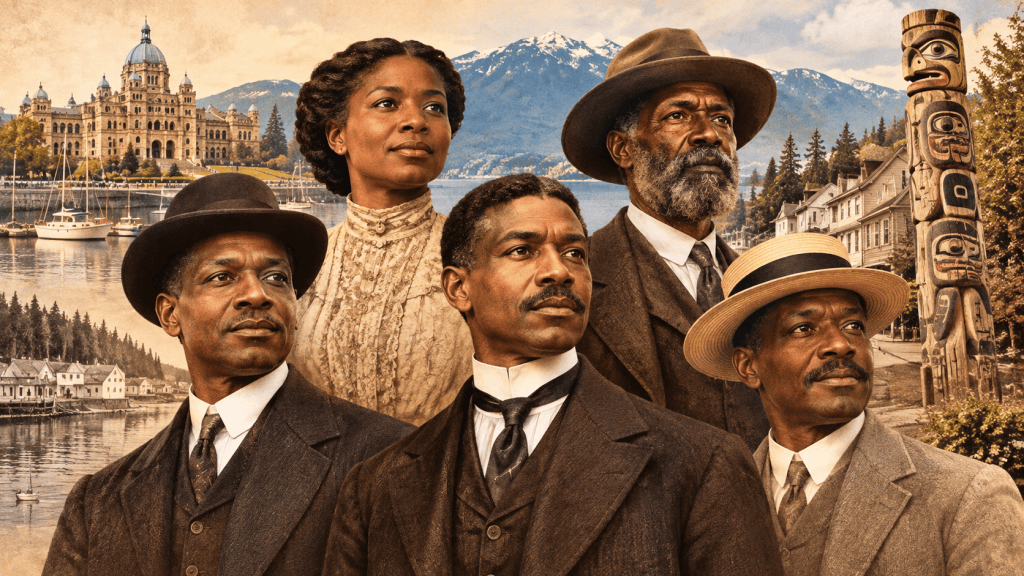
These stories are not the whole story of Black history in B.C.—but they are an excellent starting point for classroom inquiry. Each profile includes a question students can use to think beyond dates and names and consider how people shape the places where they live.
1. Mifflin Wistar Gibbs: civic leadership and political change
Mifflin Wistar Gibbs (1823–1915) arrived on Vancouver Island in 1858 as part of the migration of Black settlers from California. An entrepreneur and community leader, Gibbs helped build the early Black community in Victoria and entered public life. In 1866, he was elected to Victoria City Council, becoming the first Black person elected to public office in what is now British Columbia. He served two terms and also chaired the council’s finance committee.
Gibbs’s story is a reminder that Black British Columbians were involved in shaping civic institutions from the earliest years of the colony. His work in business and politics also shows how economic participation and political voice can reinforce one another. Read the Parks Canada national historic person profile and the Dictionary of Canadian Biography entry for more detail.
Ask students: What does representation in local government make possible? What barriers might Gibbs have faced, and why does his election matter today?
2. Sylvia Stark: family, farming and community endurance
Sylvia Stark (1840–1945) was born into slavery in Missouri and came to British Columbia with her family, settling on Salt Spring Island. The Stark family became part of the island’s early Black farming community. Sylvia’s life spanned more than a century, and her family’s history offers a window into migration, land, labour, family knowledge and the determination required to build a home in a new place.
Her story also invites students to consider whose work is remembered in local histories. Farming, raising families, preserving community memory and passing knowledge between generations are all forms of contribution. The BC Black History Awareness Society’s Sylvia Stark biography and the British Columbia’s Black Pioneers oral-history project provide further background.
Ask students: What can family stories teach us that official records may leave out? How do people create community and belonging in a new place?
3. John Craven Jones: education on Salt Spring Island
John Craven Jones (1834–1911) was a Black educator who arrived on Salt Spring Island in 1859. A graduate of Oberlin College in Ohio, he became the island’s first schoolteacher and taught local children for many years, often in modest spaces before a schoolhouse was established. His work placed education at the centre of community-building in one of B.C.’s early Black settlements.
Jones’s story is especially valuable for students because it connects the history of education to the history of migration and settlement. It also raises questions about access to schooling, the value of teachers and the unpaid or under-recognized labour that helped early communities function. Learn more through the BC Black History Awareness Society profile and the Community Stories feature on Jones.
Ask students: What does a community need in order to establish a school? How might a teacher influence the future of a place?
4. John Sullivan Deas: entrepreneurship on the Fraser River
John Sullivan Deas (1838–1880) was a Black tinsmith and entrepreneur who became a leading figure in British Columbia’s early salmon-canning industry. After arriving in the colony, he worked in metal trades and business before establishing a salmon cannery on the Fraser River in the early 1870s. The site became known as Deas Island, preserving his name in the region’s geography.
Deas’s career helps students see that Black pioneers were not only present in the province’s early communities; they also helped build important industries. His story can open discussion about skilled trades, entrepreneurship, labour, technology and the economic history of the Fraser River. Explore the BC Black History Awareness Society biography and the Gulf of Georgia Cannery National Historic Site profile.
Ask students: What skills and resources are needed to build a successful business? How can a person’s work leave a lasting mark on a region?
5. Seraphim “Joe” Fortes: public service and care for community
Seraphim “Joe” Fortes (1863–1922) was born in Trinidad and arrived in Vancouver in 1885. He became a familiar and much-loved presence at English Bay, where he taught generations of children to swim and helped keep beachgoers safe. The City of Vancouver appointed him its first official lifeguard in 1900. He was widely admired for his public service, and the city honoured his memory after his death.
Fortes’s life shows students that leadership is not limited to elected office or business ownership. It can also mean showing up consistently, caring for others and using one’s skills to make a public space safer. The Dictionary of Canadian Biography profile and the City of Vancouver’s Black history in parks page offer useful context.
Ask students: What makes someone a community hero? How can public service change the way people feel about a neighbourhood or city?
Bringing these stories into the classroom
These five pioneers offer a starting point for connecting local history to larger themes in Canadian history and social studies. Teachers can invite students to:
- Place each person on a timeline and map the communities where they lived and worked.
- Compare different forms of leadership: political, educational, entrepreneurial, family and public service.
- Use primary and secondary sources to distinguish documented facts, personal recollections and later interpretations.
- Research a Black history-maker from their own community and present what they learn through a short biography, poster, podcast or oral-history project.
- Discuss why some people and communities become widely remembered while others are overlooked.
For additional classroom-ready background, explore the BC Black History Awareness Society’s Our Roots collection, the Royal BC Museum Learning Portal resource, A Great Many Firsts, and the Parks Canada designation for Black Pioneers in British Columbia.
Why these stories belong in every student’s learning
Learning about Black pioneers in British Columbia helps students understand that Black history is not separate from provincial or Canadian history. It is woven into the development of our schools, communities, industries, civic institutions and public spaces. When students encounter these stories, they gain a fuller understanding of the people who helped shape the places they call home.
The Robinson Museum Development Society (RMDS) is committed to preserving and sharing Black Canadian history in British Columbia through cultural exhibits, education and community programs. Through initiatives such as Passages: Walk Through Afro-Canadian History, we aim to make these histories accessible, engaging and meaningful for learners and communities.
Explore the ways to get involved with RMDS, learn about our professional development opportunities, or contact our team to start a conversation about bringing Black history into your school or community.
Sources and further reading
- Parks Canada: Mifflin Wistar Gibbs, National Historic Person.
- Dictionary of Canadian Biography: Mifflin Wistar Gibbs.
- BC Black History Awareness Society: Sylvia Stark.
- British Columbia’s Black Pioneers: Salt Spring Island Is My Home — Sylvia Stark.
- BC Black History Awareness Society: John Craven Jones.
- British Columbia’s Black Pioneers: John Craven Jones, Salt Spring Island’s First Teacher.
- BC Black History Awareness Society: John Sullivan Deas.
- Gulf of Georgia Cannery National Historic Site: John Deas.
- Dictionary of Canadian Biography: Joseph Seraphim Fortes.
- City of Vancouver: Honoring Black History in Parks.
- Royal BC Museum Learning Portal: A Great Many Firsts.
- Parks Canada: Black Pioneers in British Columbia National Historic Event.
Historical note: This article is an educational introduction, not an exhaustive account. Dates and biographical details are drawn from the linked institutional, archival and community-history sources. We encourage educators and students to consult the sources directly and consider whose perspectives are represented in the historical record.


Leave a Reply