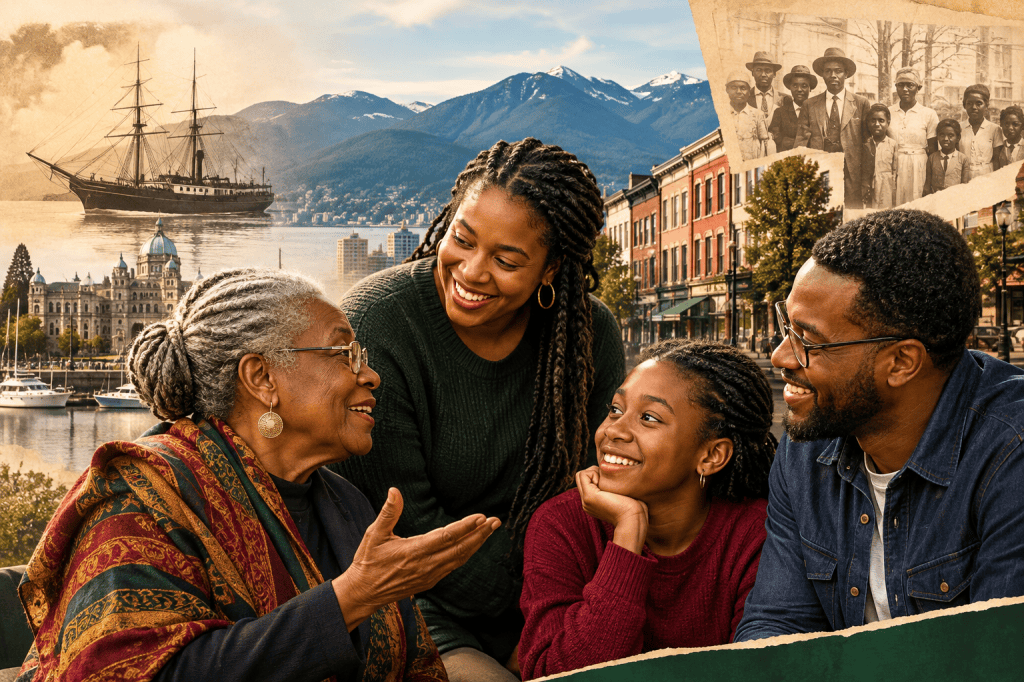
Black Canadian history is not a footnote to British Columbia’s story. It is part of the story of how this province was built. From the early Black settlers who made new lives on Vancouver Island to the neighbourhoods, businesses, cultural spaces and community leaders who shaped Vancouver, Black British Columbians have helped shape the province across generations. Their stories deserve to be known, shared and carried forward.
A story that reaches back to 1858
One important chapter began in 1858, when Black people from California came to Vancouver Island seeking greater security, opportunity and the chance to build lives with greater freedom. The steamship Commodore arrived in Victoria Harbour on April 25, 1858, carrying members of a delegation who came to meet Governor James Douglas. Around 800 Black Americans ultimately made the journey to the colony during this period. The Legislative Assembly of British Columbia’s historical fact sheet and the BC Black History Awareness Society’s account of the pioneers’ arrival provide further historical context.
These newcomers were not simply passing through. They established families, businesses, churches and civic connections. Their experiences were complex: they contributed to the growing community while still encountering racism and discrimination. Understanding both their achievements and the barriers they faced gives us a fuller picture of early British Columbia.
People who helped shape British Columbia
Among the best-known early Black pioneers was Mifflin Wistar Gibbs, an entrepreneur and civic leader who was elected to Victoria City Council in 1866. His public service was a milestone in the political history of British Columbia. The Legislative Assembly’s Black history resource documents this chapter. Other pioneers built businesses, supported religious and community institutions, and helped establish networks of mutual support.
Black history in the province is also rooted in places beyond Victoria. On Salt Spring Island, Black settlers and families—including members of the Stark family—built lives and communities whose stories remain important to the region’s heritage. The BC Black History Awareness Society’s historical resources explore the roots and contributions of these early communities. These histories remind us that Black British Columbian experiences were never limited to one city or one generation.
Hogan’s Alley and Vancouver’s Black community
In Vancouver, Hogan’s Alley, in the historic Strathcona neighbourhood, became an important centre of Black community life during the twentieth century. The area was known for its restaurants, music, gathering places, businesses and cultural connections. The African Methodist Episcopal Fountain Chapel served as a significant community institution, while Black railway porters and their families were among the people who helped sustain the neighbourhood. The Vancouver Public Library’s Hogan’s Alley history guide and the Canadian Museum of History’s Hogan’s Alley/Black Strathcona resource offer additional detail.
Hogan’s Alley is an essential part of Vancouver’s history—not only because of the community that flourished there, but also because of the impact of urban renewal and the loss of homes, businesses and gathering places. Remembering the neighbourhood means recognizing both its vitality and the consequences of decisions that displaced communities.
Why preserving Black Canadian history matters today
When history leaves people out, our understanding of the present is incomplete. Learning about Black Canadian history helps students see a more accurate picture of Canada, helps communities recognize contributions that have too often been overlooked, and creates opportunities for meaningful conversations about belonging, equity and shared responsibility.
For educators and administrators, local history can make learning more relevant and engaging. For families and community members, it can open doors to conversations across generations. For organizations and public institutions, it can support more thoughtful, inclusive approaches to education, programming and community engagement.
The work of RMDS: preserving, sharing and bringing history to life
The Robinson Museum Development Society (RMDS) is committed to preserving and celebrating Black Canadian history in British Columbia through cultural exhibits, education and community programs. We believe history should be accessible, engaging and connected to the people and places around us.
Through initiatives such as Passages: Walk Through Afro-Canadian History, RMDS is working toward immersive ways for audiences to encounter stories of Black history, migration and identity. Our work also includes educational opportunities, professional development for educators and organizations, and community engagement that encourages people to learn, reflect and participate.
Be part of the story
Preserving history is a shared effort. You can help by learning about Black history in your community, sharing family stories, supporting heritage and education initiatives, volunteering your skills, or helping bring meaningful programs to more people across British Columbia.
If you are an educator, community organization, potential volunteer, donor or partner, we would love to hear from you. Explore RMDS, discover ways to get involved, or contact our team to start a conversation.
Sources and further reading
- Legislative Assembly of British Columbia: Black History in BC — historical context on the arrival of Black pioneers and Mifflin Gibbs’s public service.
- BC Black History Awareness Society: Our Roots — stories and background on Black pioneers and the communities they established in British Columbia.
- Vancouver Public Library: Hogan’s Alley — an overview of the neighbourhood, its community institutions and its destruction during urban renewal.
- Canadian Museum of History: Hogan’s Alley / Black Strathcona — educational historical context on Vancouver’s Black community and its cultural life.
RMDS recognizes that historical records are continually being researched and expanded. We welcome community knowledge, family histories and carefully documented contributions that help deepen the public record of Black life in British Columbia.


Leave a Reply